1/3 of those with autism
are classifed as
nonverbal.
Are their speech difficulties
because they’re not very smart?
_____ Let’s have _____
APRAXIA
_____ answer_____
__ Oh wait, it can’t __
Apraxia (synonymous with dyspraxia) affects the whole body’s ability to start moving, stop moving, keep going withing a task, and generally obey what the mind is asking. Mouth, tongue, lips, jaw, vocal cords, and breath to coordinate speech? No can do. Too many parts, too much precision, too many combinations of sounds needed on-the-fly and at a high speed. Fingers? Simpler than speech but still fine motor Eyes? Very fine motor and they have to work in tandem. Gross motor is easier, but motor planning and adjusting as needed remains a challenge across everything.
__Guess who tends to have apraxia?__
2/3
_____ of those on the spectrum_____
Do autism parents know their kids have apraxia?
Do the professionals they trust in navigating and managing autism tell them about it?
Do they consider it a major obstacle and the reason someone struggles so much?
Generally not.
When we view a nonspeaker’s communication challenges through the lens of apraxia,
everything changes
Nonspeaking autists
(and others saddled with apraxia)
have a motor disorder
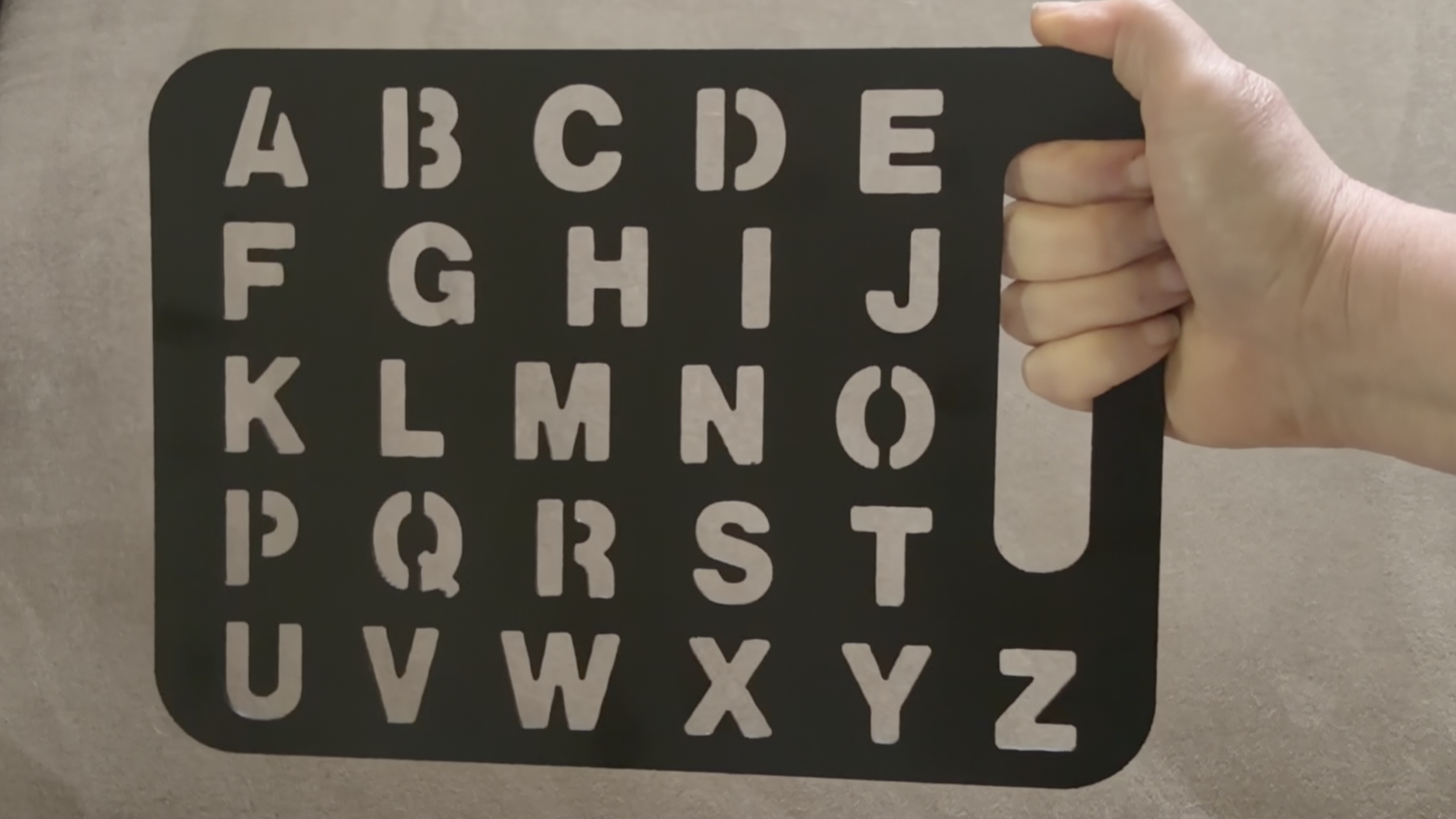
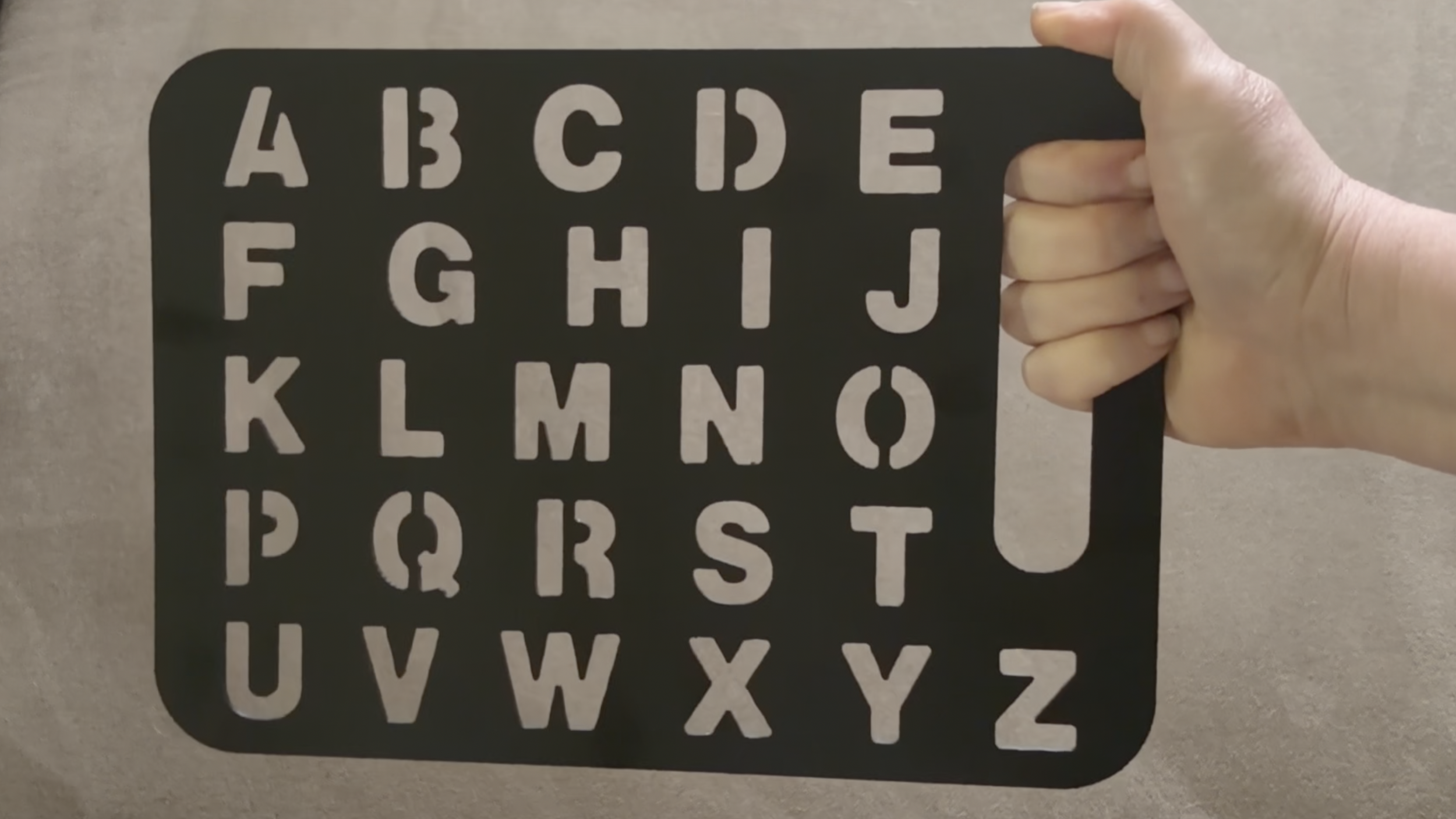
With the letterboard, we bypass fine motor. We work on minimal movement gross motor. A single finger pointing by moving the shoulder. It’s not letters on command. It’s spellers making their own letter choices. Not just because it’s more fun not to be a robot when practicing a skill, but apraxia is at its most stubborn when it’s hit with demands and pressure.
Think of it as cognitively engaging occupational therapy.
We’re not teaching language because clients already have receptive understanding. (See brain diagram). It’s also not drilling. No baby work like touch A, now touch B, now touch C, etc., as we work to build strong motor pathways to letters. Instead, it starts by spelling single-word answers to fill-in-the-blank questions to interesting paragraphs we read to them. This is just the start. Questions get more open-ended as accuracy on the letterboards improves.
You can’t point to what you can’t see
Hop around in this presentation by Susan Daniel, O.D., a neuro-developmental optometrist, Optometry's Role in Spelling Communication Methods, to see some examples of what can make things difficult for those with apraxia. Her son is a nonspeaker who spells, the presentation is speller-focused, including a great walkthrough of the method.
Directory of developmental optometrists covd.org . In my area, www.truevisiontherapy.com , in Warminster and Conshohocken has confirmed they work with nonspeakers. Ask for Dr. Trieu. She is particularly experienced in objective testing for this patient population. Without needing a patient to reply, she can do an accurate refraction to get a prescription, check eye alignment and tracking, and make suggestions that work for nonspeaking patients.
Spelling to Communicate (S2C)
A gross motor-based communication system taught with the dignity of age-appropriate content
Why age-appropriate? How do we know how smart someone is who can’t speak or can barely speak? Or speaks but doesn’t seem smart?
Using the letterboard is generally a last resort, so by the time people start, they have been accumulating knowledge through osmosis for years. What they know has just been trapped inside.
But doesn’t remembering how to do things or following simple instructions count as intelligence? We don’t always see age-appropriate responses.
Because of whole-body apraxia, judging someone by what their body does can be misleading. Nonspeakers who spell tell us they are screaming NO inside their minds when their body does something impulsive or the opposite of what they wanted. Other times, their body listens, so it’s difficult for anyone but the nonspeaker to know whether the response or behavior was intentional.
What parents say
A presentation at a researcher’s luncheon
Janine Lazur
Spelling to Communicate (S2C)
Practitioner in Training
through I-ASC.org
While in training, I’m traveling to homes near Newtown, Bucks County PA.
Once certified, I may build a classroom annex to my home, a former one-room school called Groveland School, located between Newtown and Richboro.
ACCEPTING NEW STUDENTS
Because I am in training, there’s no charge through the end of 2026
For children ages 5 and up, teens, and adults who have not found a reliable way to communicate
Weekly 50-minute sessions in your home
Using age-appropriate lessons, I will help your child or family member gain the gross motor and regulation skills needed to reliably point to letters on a letterboard. Advancing to a keyboard is the ultimate goal for all spellers
When I graduate, there will be an hourly fee, but at a permanently reduced rate for everyone I worked with during training
My mentor will review our session recordings
As your speller gains traction, I will also teach you and other caregivers how to use the letterboard with them
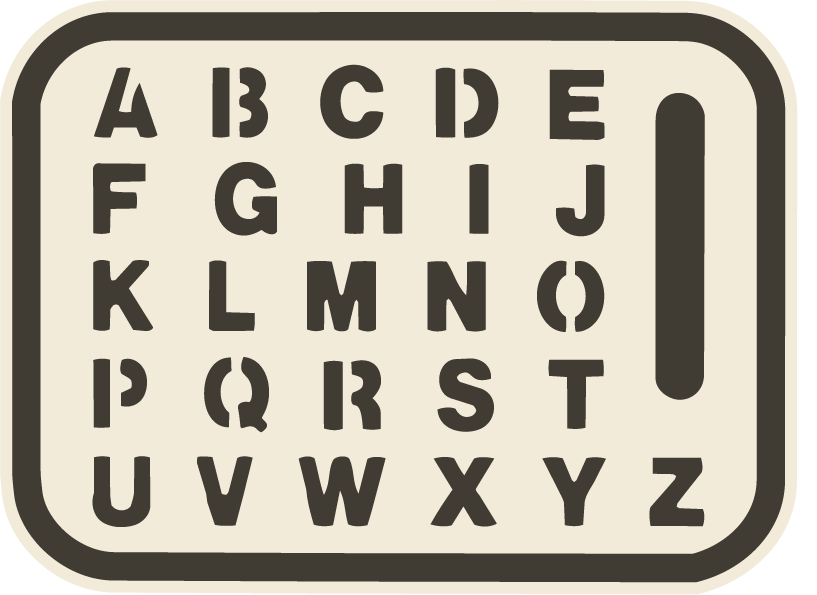
For many, going low-tech but gaining access to any word they want helps tremendously compared to other AAC.
The communication partner transcribes everything, helps with regulation, and motor coaching because apraxia, a mind-body disconnect, is the biggest challenge nonspeakers face
-
Even a nonverbal IQ test relies on reliable motor control in order to respond. Apraxia, the brain-body disconnect responsible for challenges speaking doesn’t just affect speech, it prevents bodies from showing what minds know.
Nonspeakers who use text-based communication tell us they always knew more than they could show in tests, and in life.
-
Any nonspeaking or unreliably speaking person with sensorimotor challenges—whether from autism or another condition—who cannot yet use speech as a reliable, effective way to communicate.
Every speller has tried speech therapy, as well as other types of Augmentative and Alternative Communication (AAC), but letterboard-to-keyboard ends up being the answer.
According to an I-ASC FAQ, about 70% of current spellers are autistic, the other 30% have other disabilities; such as Down Syndrome, Angelman Syndrome, Pitt Hopkins, Phelan-McDermid, Rett Syndrome and other genetic conditions or symptoms that affect motor-sensory skills.
-
No. Knowing how to spell is not a requirement. The founder of S2C says they have yet to meet a nonspeaker who hadn’t already figured out how to before starting on the letterboard—and if there ever is a first, phonics and spelling can be taught.
Further support: Study Reveals Unexpected Literacy in Autistic People Who Cannot Speak Dr. Vikram Jaswel, University of VirginiaIn S2C sessions, we read age-appropriate lessons during which keywords or difficult words are spelled aloud and written. This is not the spelling bee people who hear “spelling” might expect.
As motor control and accuracy increase, questions during lessons won’t be restricted to ones about keywords. That’s when spellers really show off what they know and can start spelling about opinions and feelings on the topic.
Categories of Nonspeakers
Little to no speaking
1
A person who may or may not be able to produce a small number of words. They struggle to communicate using speech.
Minimally speaking
2
A person who may be able to use some speech to produce a number of words or phrases, but does not have enough speech for robust and flexible communication.
Unreliably speaking
3
A person who may have the ability to speak but cannot always access their speech intentionally or with the correct communicative intent. This includes people who repeat what they hear, talk about things from childhood, or very narrow interests. None of it in a conversational way. See Autastic Tom’s video below his experience as one who talks but still needs a letterboard for true expression.
Why you
should try
Is your loved one able to tell you about their day? Share opinions, ideas, hopes, or even make fun of you?
These are some of the things that open up for spellers.
A must watch
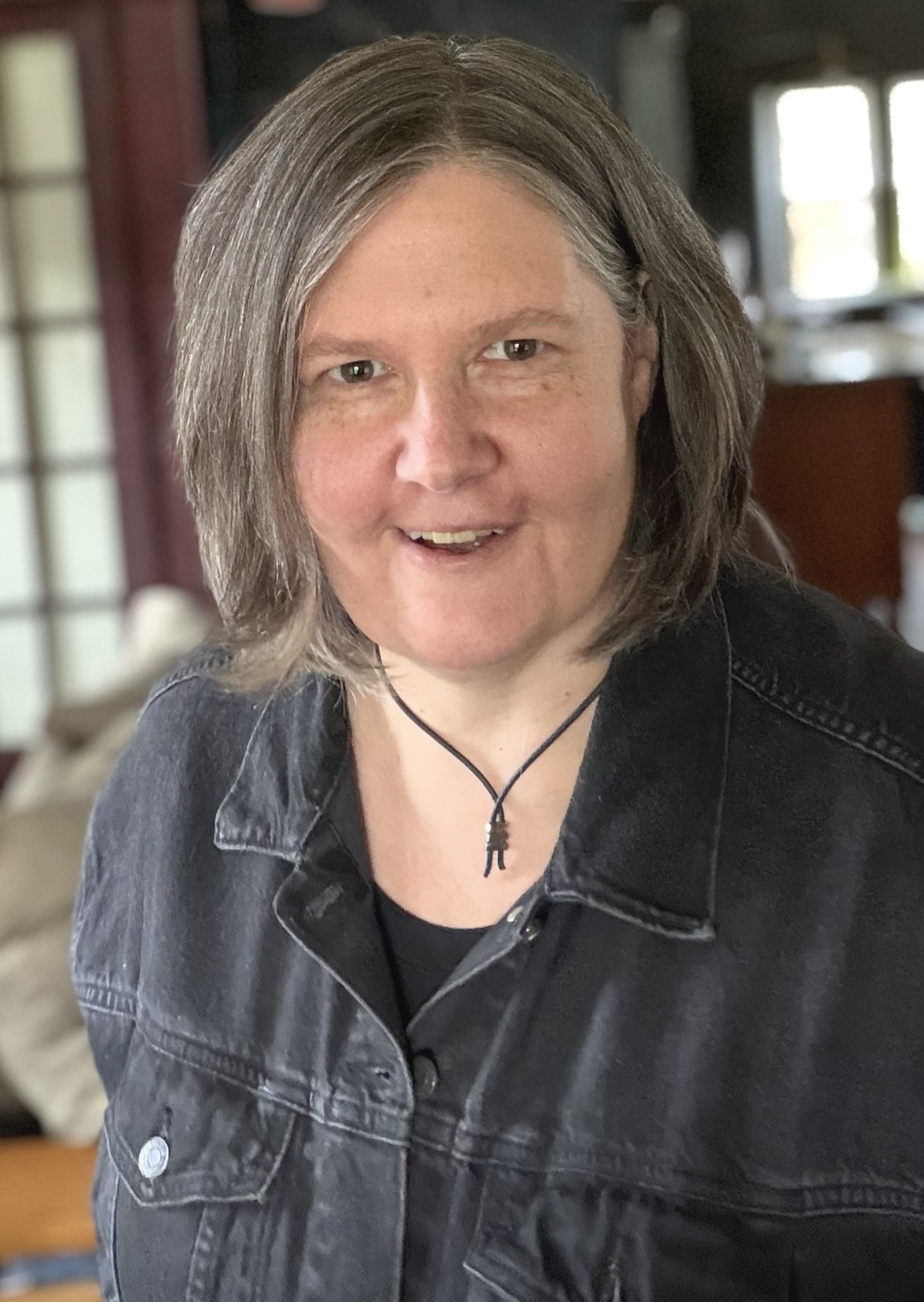
About me
This is a subject I’ve become so passionate about that I’m making a career switch.
My work as a creative director and designer, primarily for ad agencies, didn’t lead me here directly, but it has prepared me for it. Many of my projects have been in pharma, working with medical writers to help explain why and how certain drugs work and how they can change lives.
What’s different with nonspeakers is that a medical condition is creating such sensory and behavior complexity that entire people—millions of people—are remaining unknown as people because their thoughts have no bodily means of expression. And worse, no one on the outside knows that there’s such a dramatic split going on. From the outside all we have is what we see, but it’s not the mind, not the person inside.
In all of the reading and watching that I’ve done on nonspeakers, I cannot shake this one thing. When a speller is finally able to share what they’re thinking, every speller fires the same flare into the air, something to the effect of:
Now that you know I’m in here, let’s help others like me.
So, nonspeakers, I hear you. Parents, caregivers, friends, if you live within a reasonable distance of Newtown in Bucks County, PA, a little North of Philadelphia, not from from the NJ border, and have a nonspeaker in your life, let's get them spelling so they can be truly known.
If you’re not nearby, use the I-ASC Practitioner Finder
Or contact I-ASC to see if there’s a Practitioner in Training near you. We are not listed in the directory until we’re certified.
-
In 2021, thanks to a pediatric SLP's experiment with her own dog, I taught my dog a supplemental way to communicate. She can ‘say’ words.
Think of it as doggie AAC. Pets use floor buttons, like a human AAC user would press buttons on a tablet, minus the nested menus and keyboard features.
Why it matters: Not only is it how I got interested in human nonspeakers, but I also know that if my pets can use buttons to share a fraction of what’s on their minds and do it in surprisingly competent ways, then nonspeaking people deserve every possible effort from society to help them join the world of expressive thought.It’s a long read, but for the curious:
My dog Twiggy has paw-sized buttons arranged like a giant keyboard on our floor. When she presses one, a word floats up into the air. We started in 2021 with a few buttons and now have about 150. I’m an enthusiast, and so is she.It’s not just basic wants and needs.
She presses to add thoughts to my obvious action. She saw me putting on shoes, a sure sign I’m going somewhere, and added, “COME, MAYBE, GOODBYE? THANK YOU.” (Punctuation not included)
It’s a little like Yoda in that word order is mixed up, but I understood: Maybe I can come wherever you’re headed? Thank you in advance.
I said yes, she play bowed, barked, and I brought her with me.
Watch on InstagramReflection: Pleading eyes and whining could have done the job, but would I have known the depth? That she was thinking of it as a “maybe” just a suggestion, not a demand? Or that a “thank you” in advance of hearing a yes shows both optimism and eagerness?
It’s a way to add specificity to barking
Now this doesn’t always happen, but on great days, she’ll spare my ears and instead of bouncing her bark off the window, she heads to the buttons. She might press “ANIMAL” or “STRANGER” to request a second set of eyes on a trespasser. Or even use a species-specific button: SQUIRREL, DEER, RABBIT, BIRD. “Should we worry, human?” is how it feels, and I love being able to take a look and then tell her she can stand down.
Sometimes she doesn’t have the word she needs available as a button, so I’ve realized when she presses our “BUTTON” button, it’s a wildcard standing in for something that fits the context. For example, I verbally label all the animals we encounter, but she doesn’t have buttons for every species.
A bark accompanied by a “BUTTON” button press might mean she saw a fox or a groundhog outside. Irksome creatures for her, but not frequently seen, so I don’t think they’re worth turning into buttons.Here’s a compilation of 3 instances.
Reflection: When a nonspeaker wants to express alarm, pain, or even let someone know about a problem, how do they do it? If they have no reliable AAC, it’s similar to how my dog does. Using whatever is in her power to draw my attention to a situation. But when I follow her, and the thing she was upset about isn’t visible, whether because it’s gone or I just can’t see it, I’m left with a broad, “Oh, something must have upset her.”
In the wildcard instance, pressing BUTTON to mean, “I don’t have the button for the thing, so I’m just going to say thing,” that’s not something I taught. I only say or press “button” to refer to an actual button.If a dog can figure this out, that they can use a stand-in as a fill-in-the-blank, what are even intellectually disabled humans capable of?
To be clear, I stand firmly in the presume competence camp, where every human is fully capable of learning, even without explicit instruction or proof of what they know, and that every human is hungry for knowledge, especially those who have been deprived of education.
One more comment about the “BUTTON” button press: How frustrating must limited-word AAC be? Or knowing there’s a keyboard on a tablet but not having enough praxis (movement initiation and follow-through motor skills) to get there? Or not enough fine motor control to spell what you want to once you do get there? Or not have your high-tech AAC device’s volume be loud enough to get someone else’s attention?
Circling back to the barking comparison and how having buttons helps my dog add specifics, a human without access to a way to explain a problem, but only alert by making a ruckus or becoming visibly frustrated to solicit help, but not being able to add specifics, that’s injustice.
Why I’ve gone this deeply into pet vs nonspeaker and AAC-user comparisons, knowing it’s a deeply repulsive idea
Even if you know about button-using pets, unless you live with one who uses them in a sophisticated way, it’s impossible to understand the depth of what they do. The following things have happened in my home and others:
Pets processing confusion and grief over the loss of another pet or human loved one.
Pets using buttons for self-advocacy about illness or pain management.
Pets using words over actions when feeling aggressive
This is not to say that there’s a true parallel between my pets and those who rely on AAC.
A pet not being able to ‘speak’ is not a disabled pet. However, having buttons, if they like them and use them, is profoundly enabling.
Pets live perfectly happy lives as nonspeaking companions.
Pets are not fighting with disabled or disobedient, apraxic bodies. They have excellent aim with their paws for natural activities. Some do need practice learning the mechanics of button pressing.
Pets do have to be consciously taught language/words. They will pick up on some associations between what they overhear or are told and what it’s connected to, but it’s far different than natural and taught language acquisition in humans.
Here’s what is true: I believe every human can use words in a more sophisticated way than privileged household pets can use buttons.
My dog, and cats (yes, they press too), have me living this sci-fi life I never imagined but adore. I feel so much rage and injustice when I see how hard the nonspeaking community has to fight off skeptics, and worse, fight for the rights to use their preferred means of communication in schools. If systems like one person spelling on a letterboard or keyboard accompanied by a CRP (communication regulation partner) were more widely seen, there would be more parents willing to try and more systems in place for accommodation. And ultimately,
There are an estimated 31 million nonspeakers in the world. Things have to change.
To circle back to dogs, and a common objection, that nonspeakers should not need a human assistant with them while communication. It’s not that far removed from someone needing a guide dog. I know, now here I’m comparing humans to animals again, but it’s about support. That level of support is not something my dog, as smart as she is, could do. Plus, that role is the one I’m learning as an S2C Practitioner in Training, to make a difference for nonspeakers in my area.
—————A page full of facts on a site about the issues: United for Communication Choice
Communication4All’s C4A Network Advocacy Center
The nonspeaking brain:
Wernicke’s works. Broca’s isn't broken.
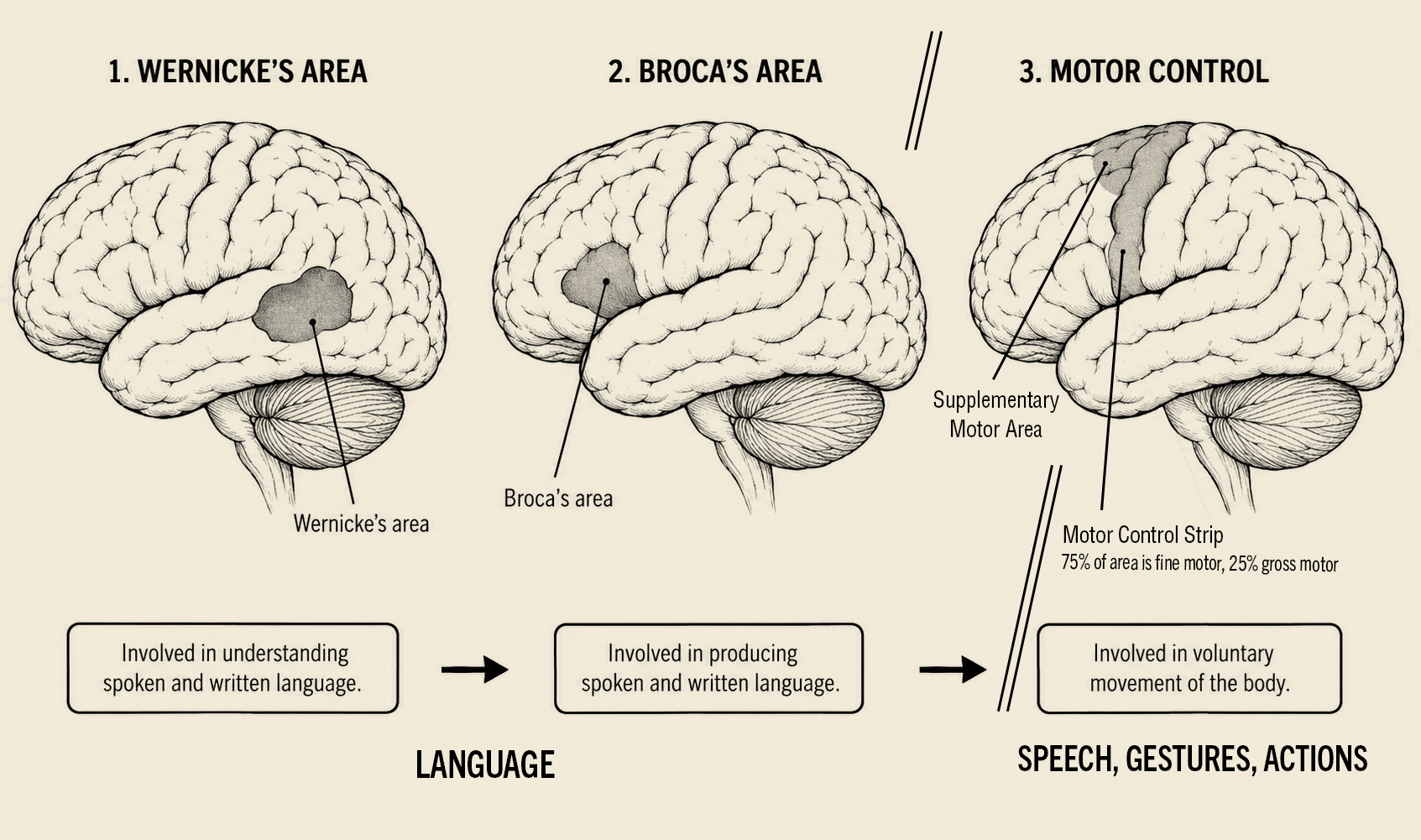
The slanted double line represents apraxia. Also called dyspraxia or developmental coordination disorder, it’s a motor impairment present in 2/3 of autism cases.
This is why spelling works.
It centers on age-appropriate content for a mind that has been absorbing everything and practices gross motor control. Achieving control and having a voice, that supports regulation.
Takeaways, based on biology and what nonspeakers tell us:
An apraxic person not speaking, or not responding as intended—even with actions—is not experiencing comprehension problems. It’s a glitchy connection in the brain, isolating the mind and causing a glitchy body.
Measures of intelligence, even with nonverbal tests, never show true intelligence because the mind can’t reliably control the body. Add something novel and stressful, then the body really has trouble.
High-tech AAC often doesn’t lead to keyboard use within the AAC device as a way to express more than simple things. For someone with a less responsive and inconsistently responsive motor strip, making communication happen in daily life requires a lot of self-directed motor planning and motor control. Something their mind wants, their body can’t always do. Or the body chooses comfort food like a childhood video, instead of what the mind asked it to do.
Having a communication partner helps. Apraxia can be a two-person job at times: one person to think and communicate, the other to troubleshoot and support.
Still need more information?